
Clutch Tracking: Eggs, Egg Sacs, and Incubation
When a pairing produces eggs or an egg sac, create a clutch to track it through incubation. Scutely supports reptile clutches, amphibian egg masses, and arachnid egg sacs.
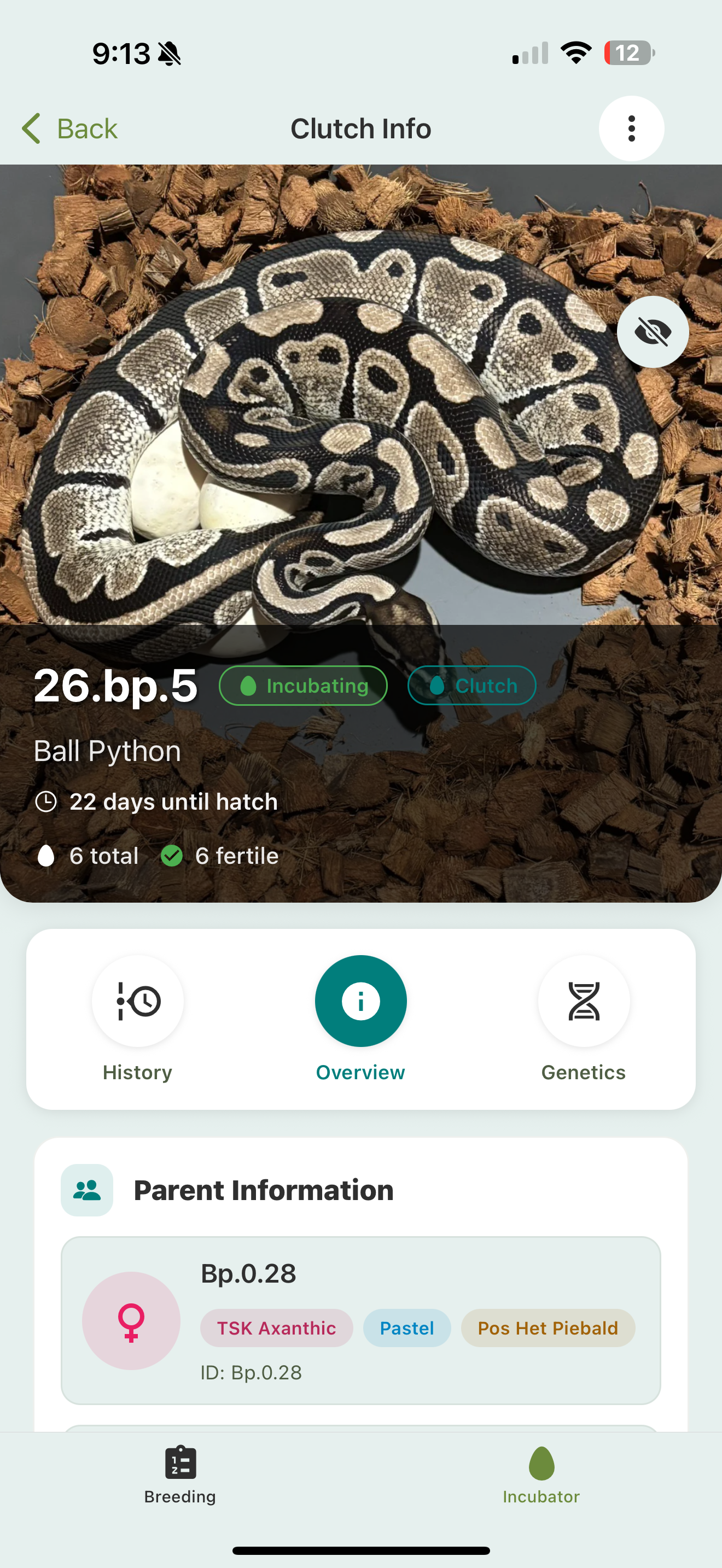
Creating a clutch
Logging a Laid Clutch or Gave Birth event on a breeding group creates the clutch for you, or you can create one directly. Each clutch gets:
- A clutch ID and name
- The parents (sire and dam)
- Egg counts — total, fertile, and infertile (or offspring count for live-bearers)
- An expected hatch date and a photo if you want one
- An incubator, if you use them (see Incubators)
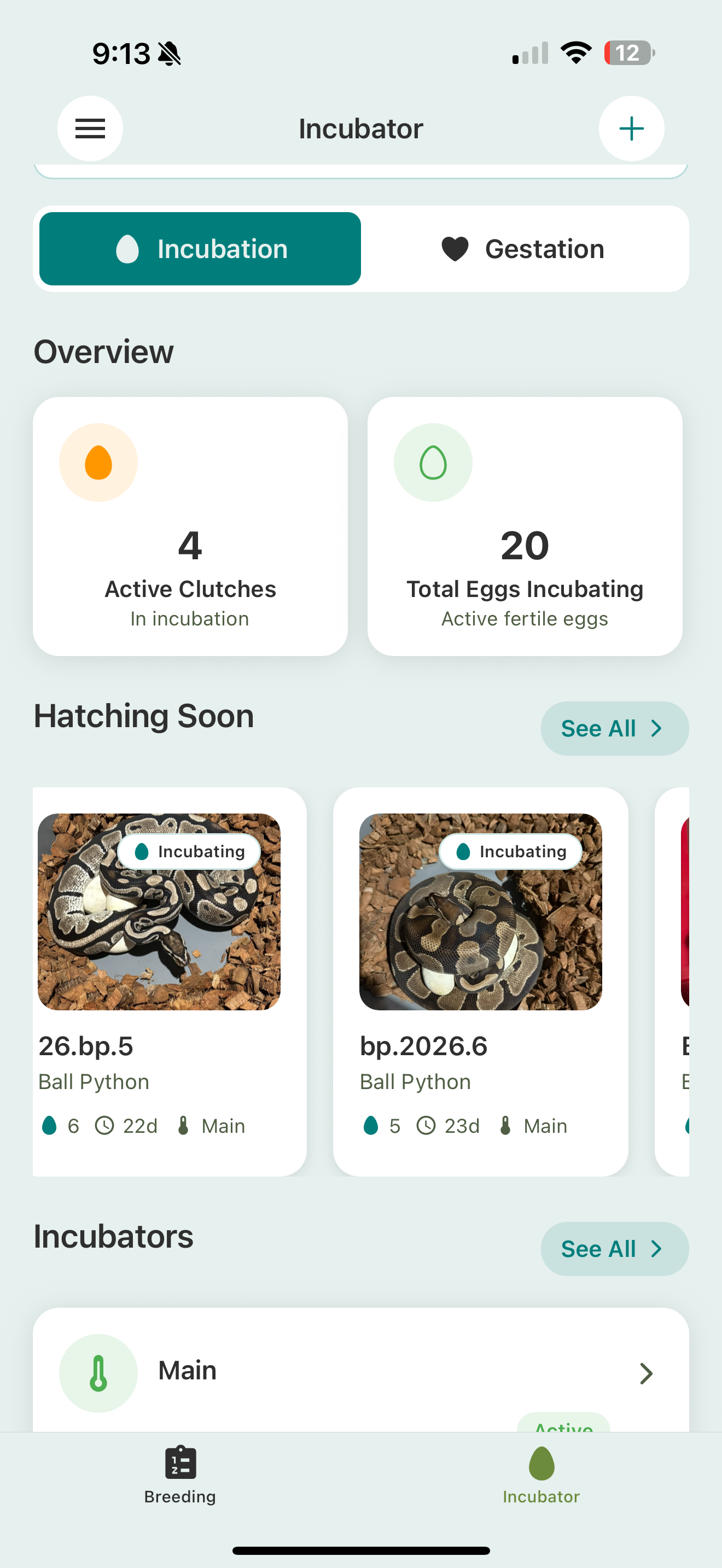
Clutches live in the Incubator → Incubation tab, where an overview shows your active clutches, total eggs, and what’s hatching soon.
For tarantulas and other arachnids, clutches are tracked as egg sacs: same idea, without the per-egg counts.
Clutch events
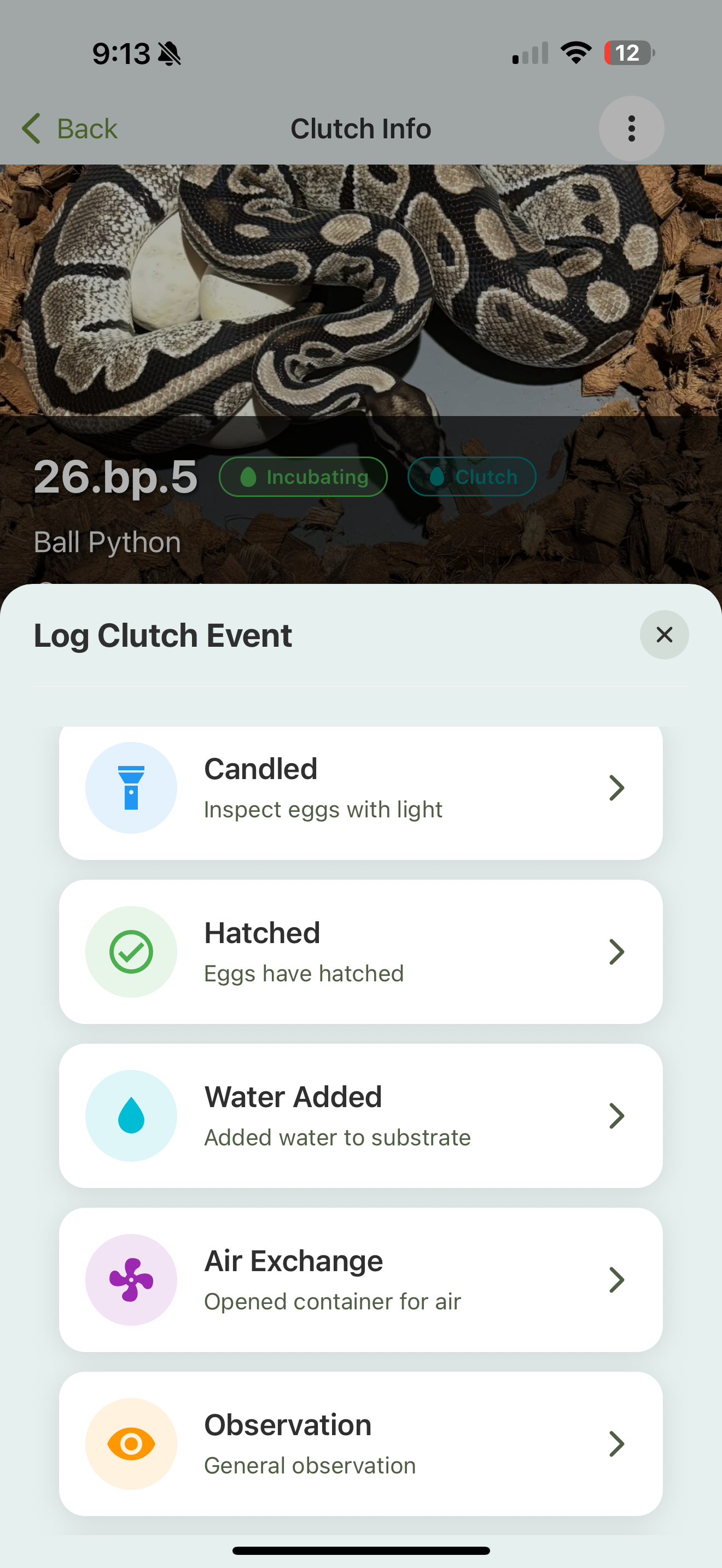
Log what happens during incubation on the clutch itself:
- Candled — what you saw
- Egg went bad and mold removed — keeps your fertile count honest
- Water added and air exchange
- Temperature and humidity readings
- Observation and status changes
By hatch day you have the whole incubation on record, which helps when you’re comparing what worked across seasons.
Printing clutch cards
Clutches have their own printable ID cards: a business card, index card, or address label with the clutch details, handy for labeling incubator tubs. They work like animal ID cards.
When they hatch
When babies hatch or are born, turn them into hatchling profiles that link back to their parents. See Hatchlings & lineage.